Flat Copper Wire (Hairpin) Motors: Why Overload Capacity Jumps ~20%
If you compare motors side by side, the ones wound with flat copper wire (often called hairpin winding) consistently deliver more punch under load than identical-looking motors wound with round wire. The headline number — roughly 20% more overload capacity — is not marketing talk. It comes from three measurable physical changes in how the copper sits in the motor.
1. Higher slot fill = more copper in the same space
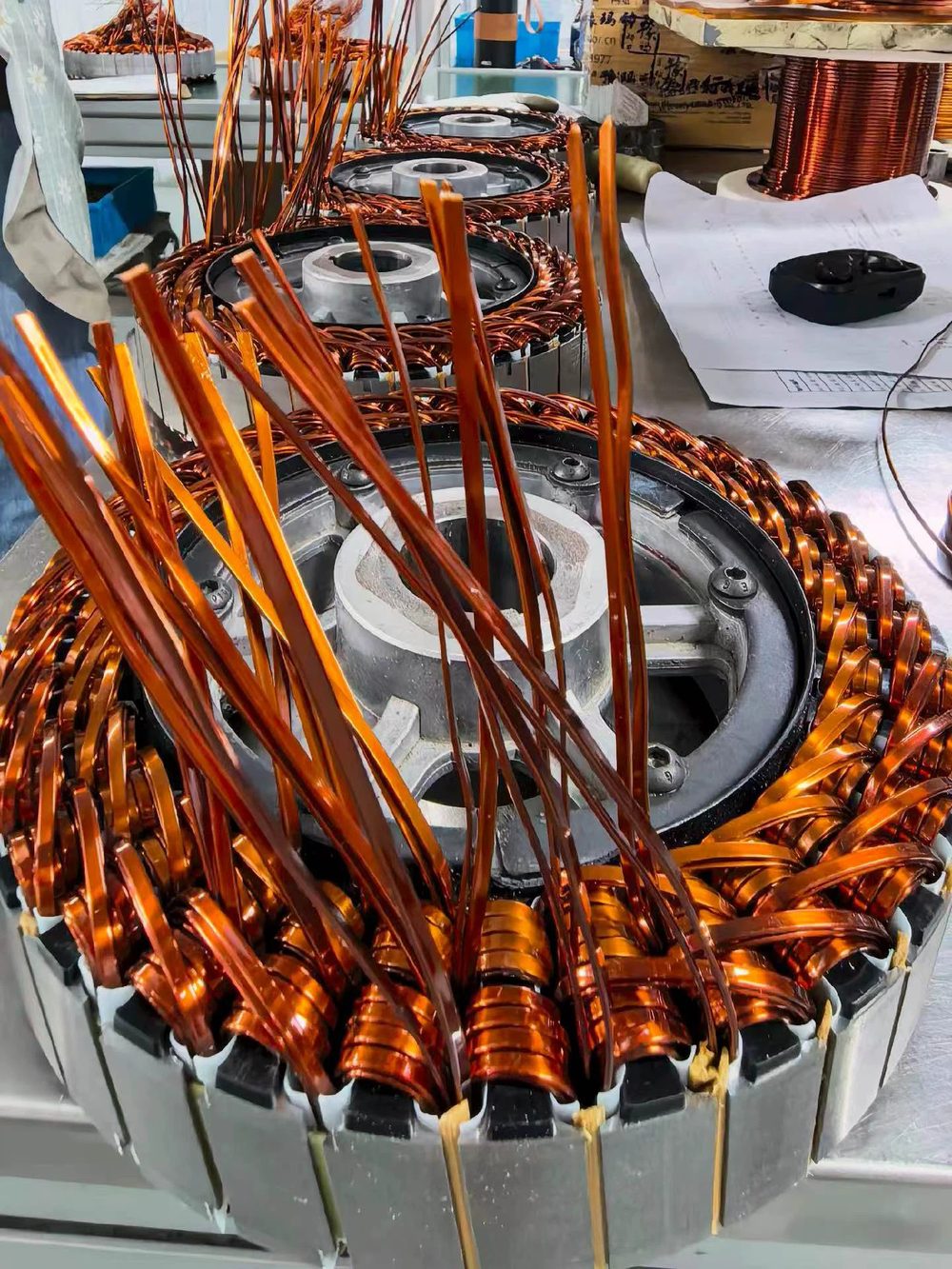
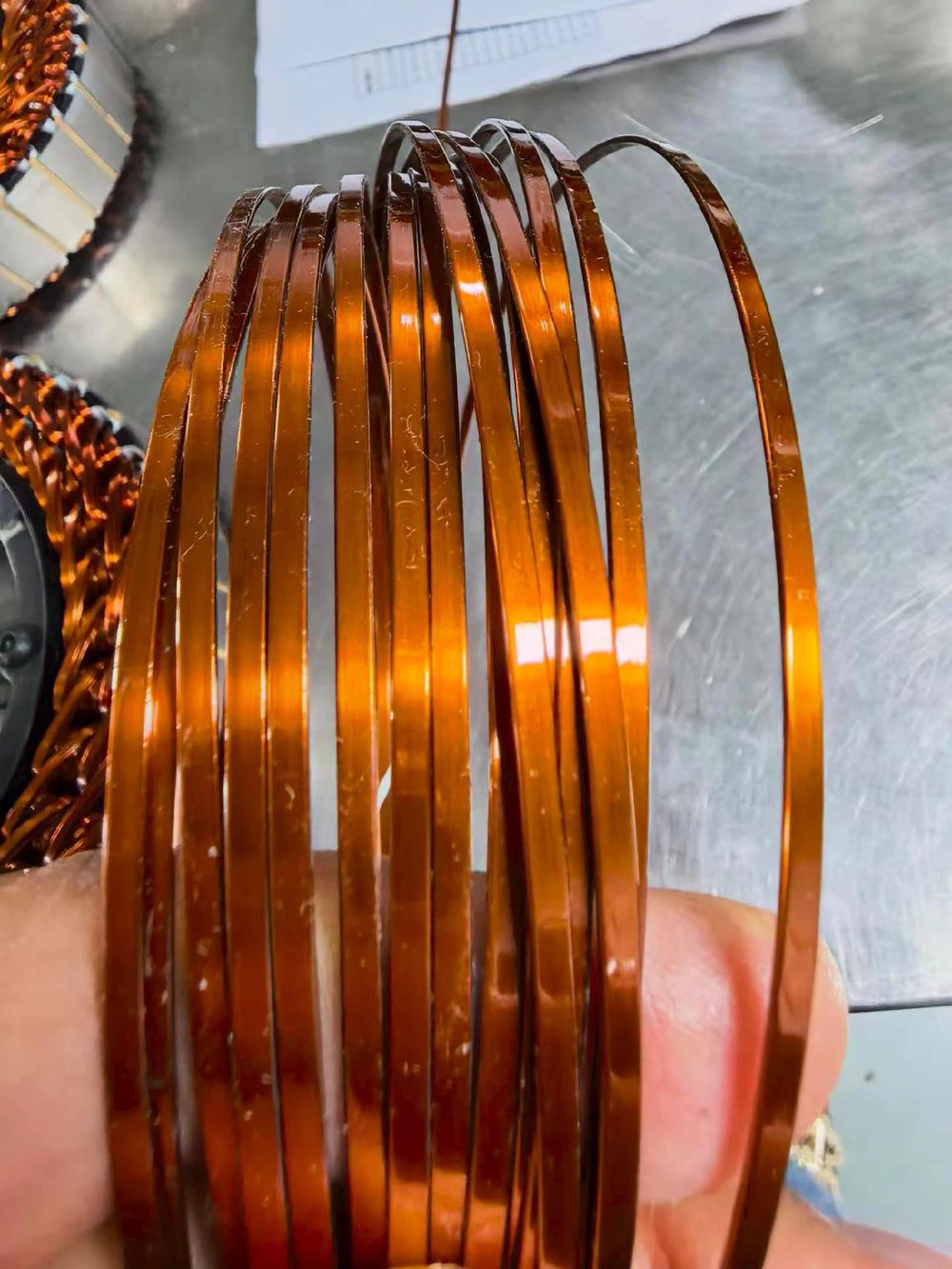
Round wires leave wedge-shaped air gaps where three or four circles meet inside a stator slot. A flat rectangular conductor stacks edge-to-edge and fills those corners. The result is a higher copper fill factor — you simply fit more conducting cross-section into the same stator, which lowers winding resistance.
2. Lower resistance = less heat for the same current
Because more copper fits in the slot, winding DC resistance drops for the same magnetic design. Lower resistance means less copper loss (I²R heating) at any given current. That is exactly what buys you extra overload headroom: the motor heats up more slowly, so it can sustain a higher current for longer before hitting the same temperature limit.
3. Better heat path out of the winding
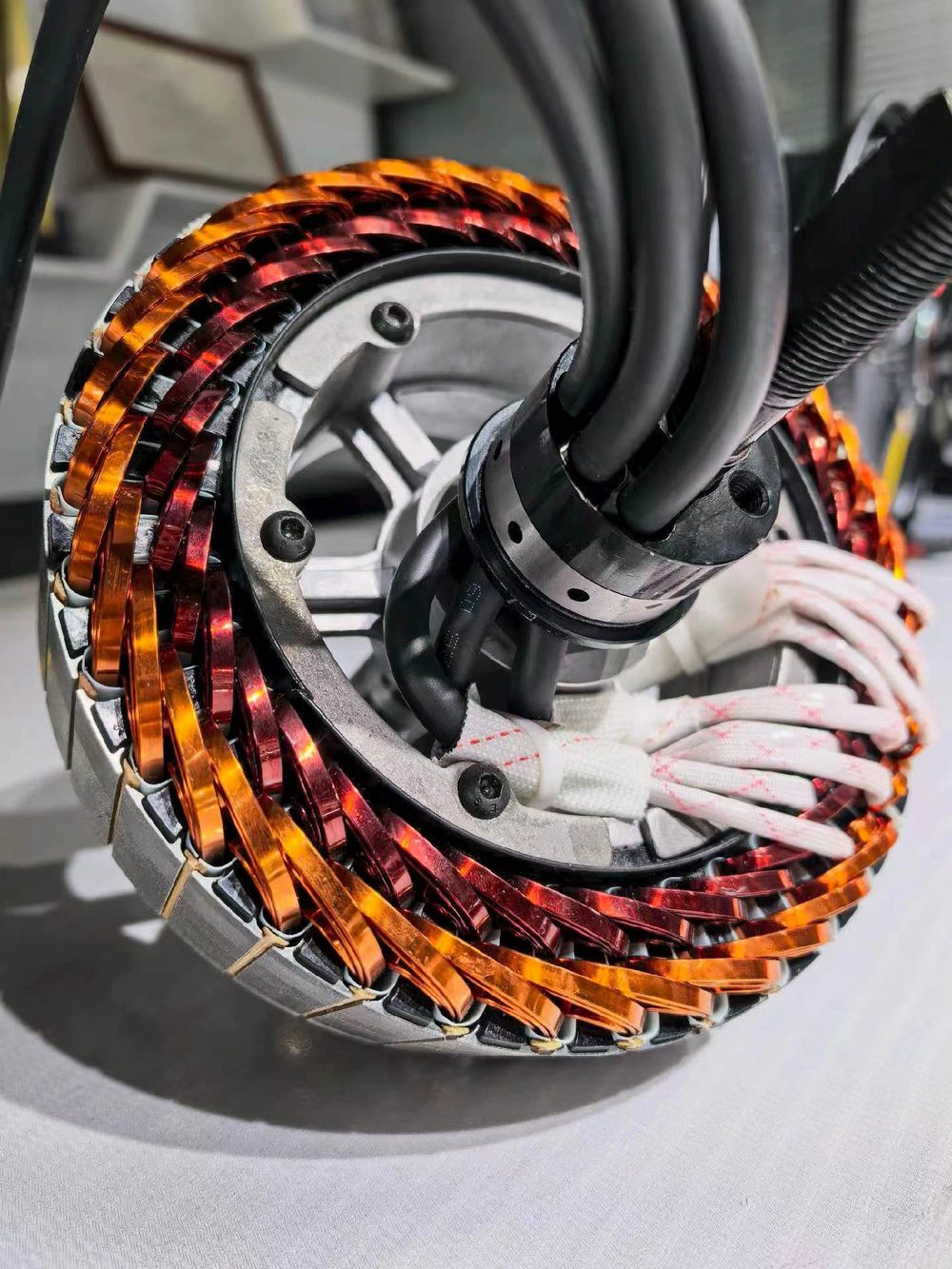
Heat has to escape the copper to reach the stator core and then the housing. A rectangular conductor has more flat surface contact with its neighbours and with the slot walls than a round wire touching at thin lines. That better thermal path pulls heat out faster, keeping the copper cooler and further raising the current the winding can safely carry.
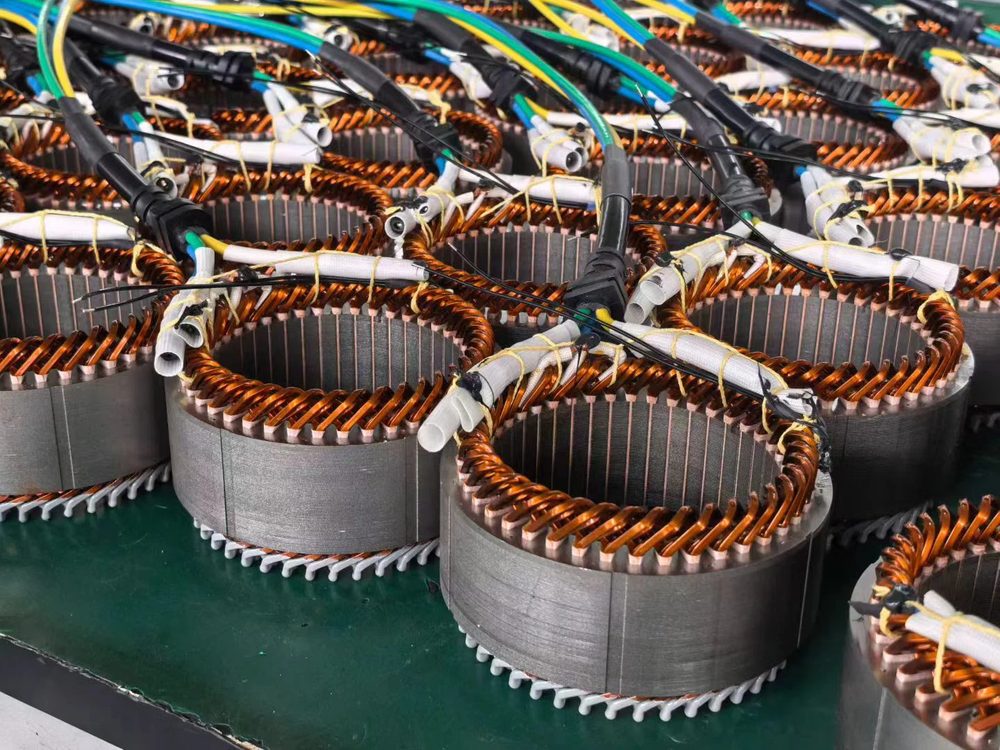
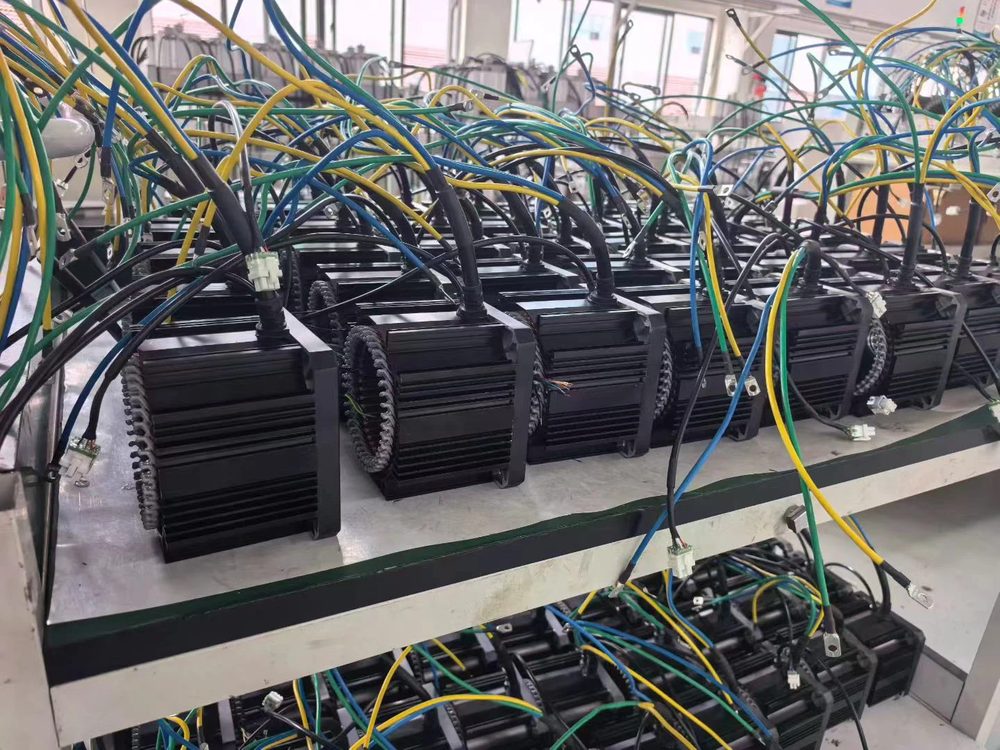
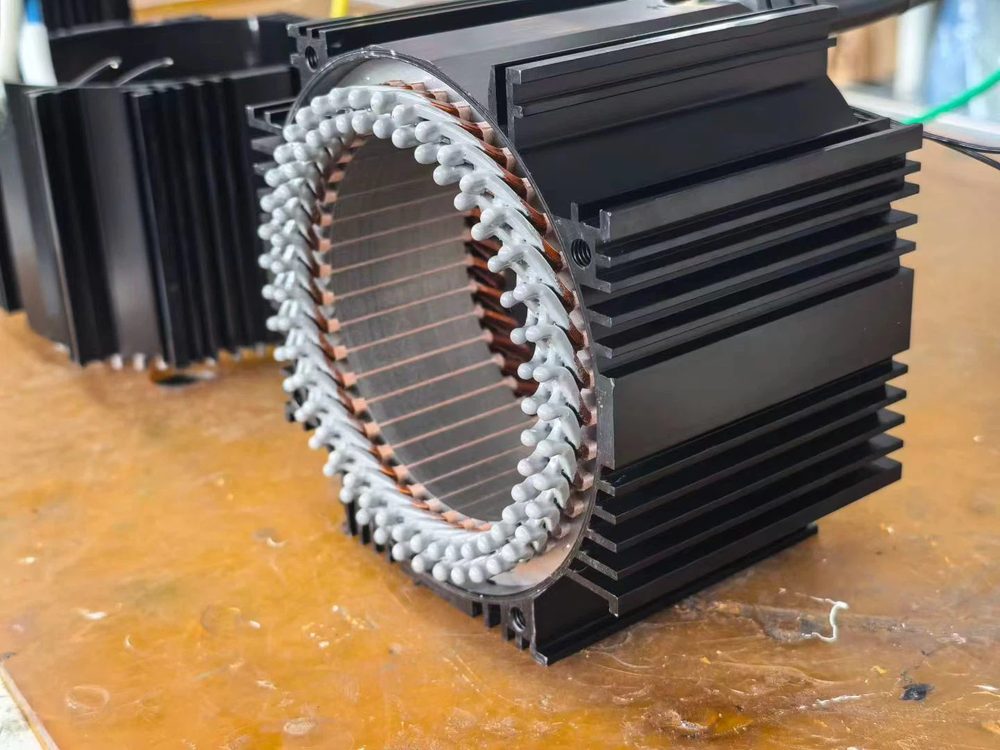
Flat wire vs round wire — at a glance
| Factor | Round copper wire | Flat copper wire (hairpin) |
|---|---|---|
| Slot fill | Lower (round gaps) | Higher (packed edges) |
| Winding resistance | Higher | Lower |
| Copper loss (heat) at same current | Higher | Lower |
| Heat transfer out of winding | Line contact | Surface contact |
| Overload capacity | Baseline | ≈ +20% |
| Power density | Baseline | Higher |
A concrete example: the YM-120 mid-drive hairpin motor
DODO now supplies a permanent-magnet synchronous mid-drive motor wound with flat copper wire, built with three lifting lugs for easy frame mounting. Its datasheet confirms the point: rated efficiency ≥ 93%, peak torque 43 N·m at 6,000 rpm, in a 48–72 V system with class-H insulation and IP67 protection.
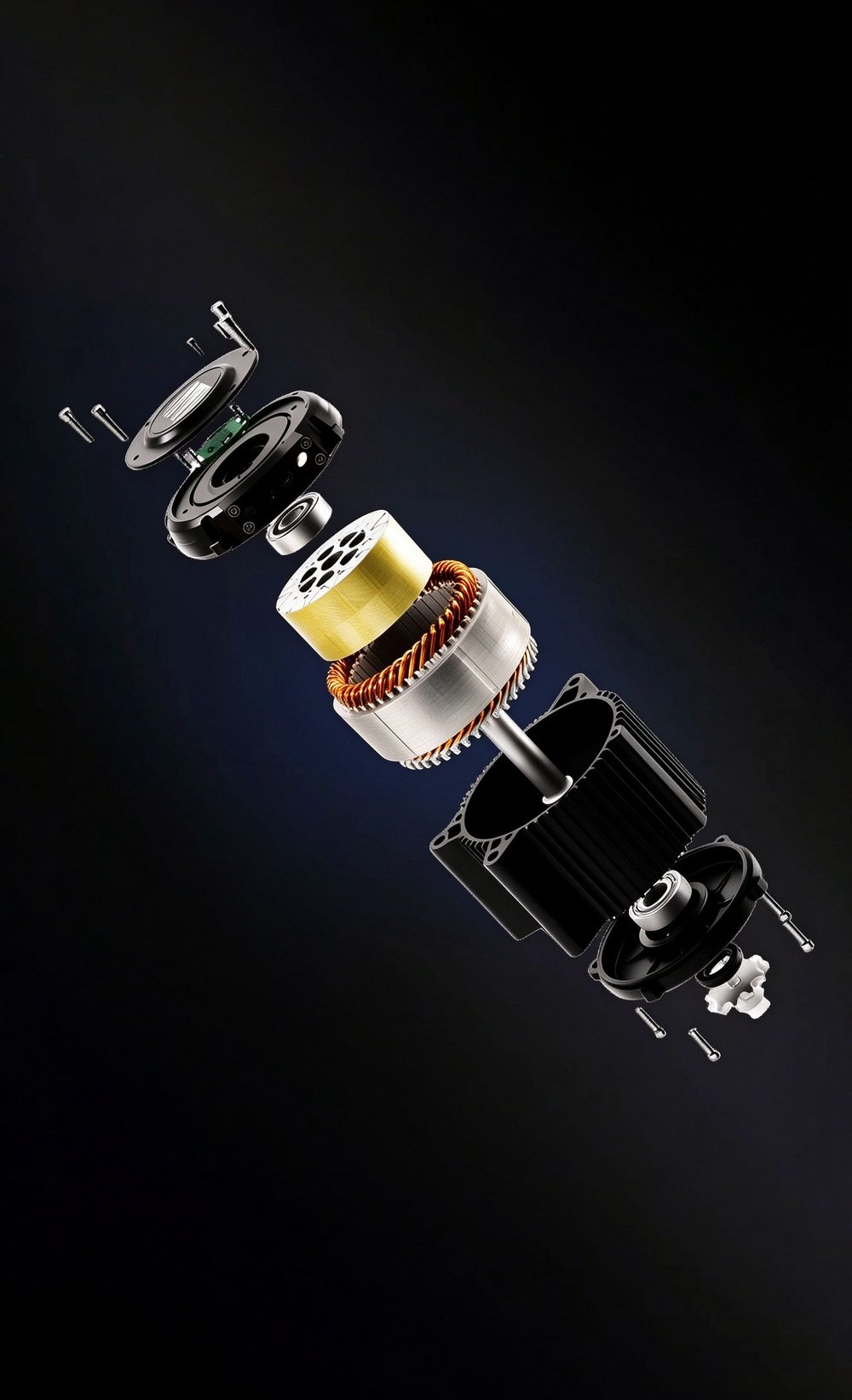
| Spec | Value |
|---|---|
| Voltage | 48–72 V |
| Sensor type | Encoder / Hall sensor |
| Rated power | 1,000–3,000 W |
| Peak speed | 6,000 rpm |
| Peak torque | 43 N·m |
| Rated efficiency | ≥ 93% |
| Transmission | Chain drive |
| Cooling | Natural air cooling |
| IP rating | IP67 |
| Insulation class | Class H |
Need a motor that pulls harder uphill and overhauls longer?
Tell us your bike weight, wheel size and target top speed — we will match a flat-copper-wire motor, controller and gear ratio for your platform.
Ask DODO Engineering